


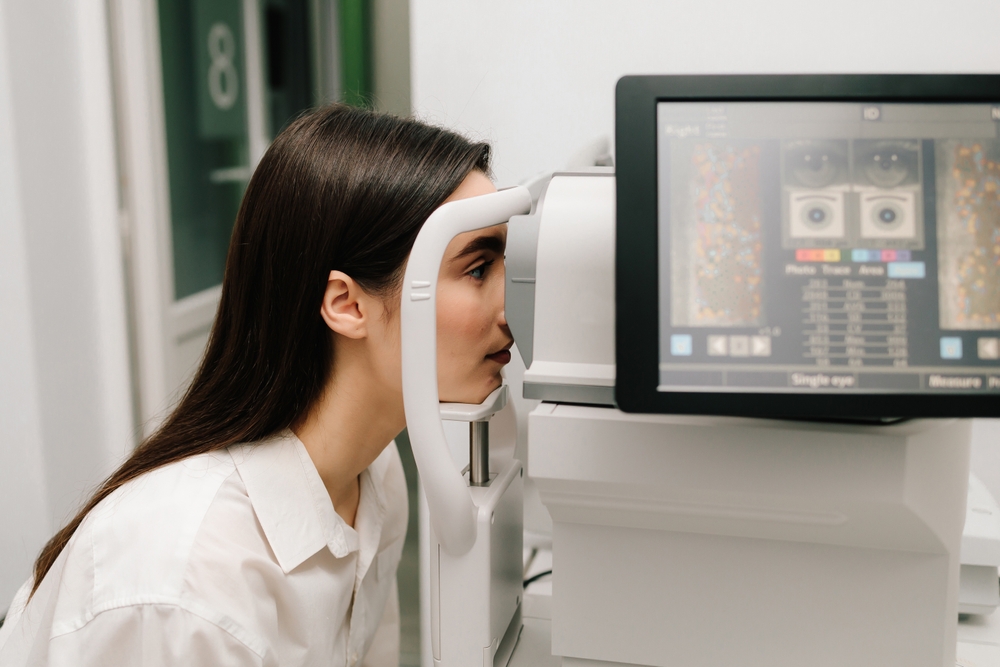
Age-related macular degeneration, or AMD, affects the macula, which is the part of the retina responsible for sharp central vision. Because AMD can progress over time and may not cause major symptoms at first, monitoring is a key part of protecting long-term sight. Highline Eye Care offers ocular disease management in Flagstaff and highlights both OCT scans and Optos retinal imaging as part of its technology and eye disease care.
What OCT Shows That the Eye Cannot See Alone
OCT, or optical coherence tomography, is a noninvasive scan that creates detailed cross-sectional images of the retina and related eye structures. Highline Eye Care explains that OCT provides detailed, color-coded, 3D-style imaging and allows the doctor to look deeper into the retina and underlying structures. For AMD, that matters because the scan can help reveal changes developing beneath the surface before vision loss becomes more obvious.
Why Retinal Imaging Matters for AMD
Retinal imaging gives the optometrist a wider photographic view of the retina and helps document what the back of the eye looks like over time. Highline Eye Care highlights retinal imaging with the Optos California Machine and notes that regular eye examinations help detect eye conditions early, including diseases that often develop without symptoms. For AMD monitoring, retinal imaging can help compare changes from one visit to the next and support earlier detection of concerning retinal changes.
How Optometrists Use OCT and Retinal Imaging Together
OCT and retinal imaging do different jobs, which is why they work well together. Retinal imaging helps document and monitor the overall appearance of the retina, while OCT provides a more detailed internal view of retinal layers and structures. Highline Eye Care specifically notes that OCT is used to help identify eye issues such as age-related macular degeneration while they are still developing. Using both tools can give the optometrist a more complete picture of how AMD is changing over time.
What Optometrists Look For During AMD Monitoring
When monitoring AMD, optometrists are watching for changes that may suggest progression and a need for closer follow-up or treatment referral. Common reasons these scans matter include:
Detecting retinal changes early
Tracking progression over time
Comparing current images with past scans
Looking deeper at macular structure with OCT
Supporting more informed treatment decisions
Highline Eye Care states that early detection and correct treatment help minimize eye disease risk and reduce the potential for vision loss.
Why Ongoing Monitoring Can Protect Vision
AMD is one of the leading causes of vision loss in older adults, and Highline Eye Care notes that OCT can help identify AMD while it is developing. That is why ongoing monitoring matters even if symptoms seem mild or vision still feels usable. Regular imaging helps your optometrist catch subtle changes earlier and make more timely decisions about care.
AMD Monitoring in Flagstaff, AZ
Highline Eye Care provides comprehensive eye care, ocular disease management, OCT-related diagnostic technology, and Optos retinal imaging in Flagstaff, AZ. The office is located at 1600 West University Ave Suite 105, Flagstaff, AZ 86001.
To schedule AMD monitoring with OCT and retinal imaging, contact Highline Eye Care in Flagstaff, AZ at (928) 240-9214.


